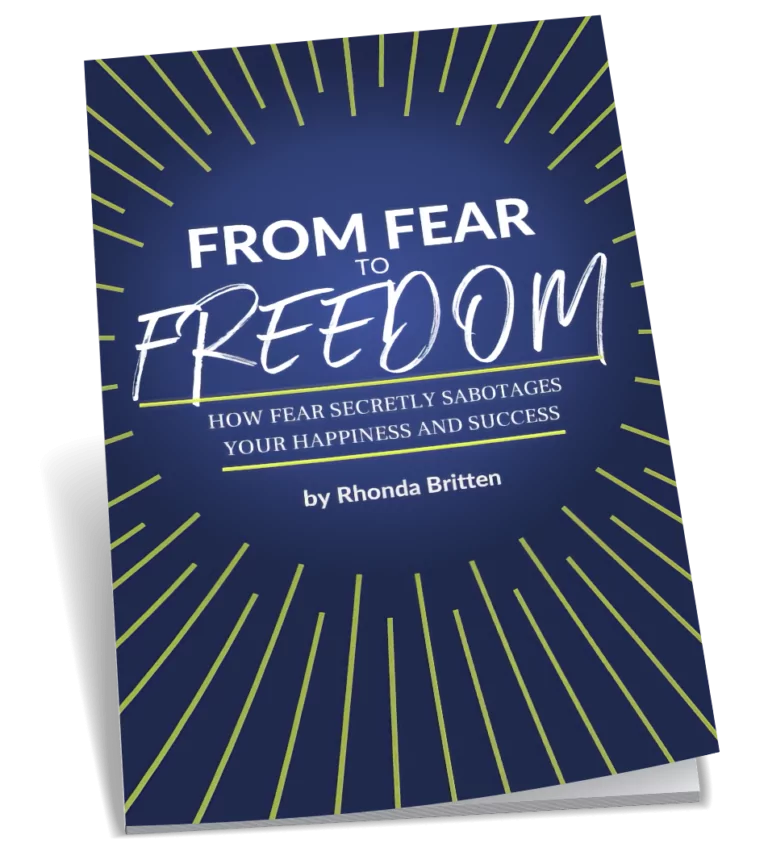
This excerpt from my upcoming trauma survivor memoir reveals the traumatic event that ultimately led me to develop the Fearless Living framework. It explains why I understand protection patterns so deeply - and why I know there's nothing wrong with you; it's just fear.
The first draft of my fifth book, my memoir, is done. Whew!
My other four books flowed out of me; the longest one took me four months to write from start to finish. This book is different.
I've been pecking away for over ten years. It'd been difficult to crack open my soul and write down how I felt and what I'd gone through (no hiding, no making it pretty).
It is my most vulnerable and heart-revealing book to date.
It's a trauma survivor memoir about my Dark Night and my parents' deaths and how they have weaved their way silently through so many of my decisions, perceptions, and relationships.

It's remarkable how our past continues to influence our present. I still am surprised how often I'm sidetracked by a thought or feeling or fear from those years so long ago.
I've decided to share this excerpt to honor the day they died—June 15.
WARNING: Vivid description of the day my parents died. If you have experienced gun violence or other types of trauma in relation to murder or suicide, read with caution. (Or don't read at all. I won't take it personally!)
A Preview of My Memoir — Chapter 6
"When your father arrives be nice to him, Rhonda," my mother said to me on the morning of Father's Day 1975. My father was on his way over to pick us all up––mom, me, and my sisters––and take us out for a fancy Sunday Brunch at the nicest restaurant in town, the Douglas House. It had been four months since the revival and four years since my mother had been forced to take my father back after his infidelity. I was 14-and-a-half years old.
Whether it was listening to the revival preacher, or hearing Helen Reddy sing "I Am Woman," or the recent death of the father who forbad her to leave my dad, or something else altogether, my mother had finally gathered the courage to ask my father to leave. As the door shut behind him, I hoped for good this time, the eggshells that had been scattered like landmines throughout the house were swept away when my mother filed for divorce. She had even started dating. Her smile, once again, lit up the room.
I hadn't seen my father since he left with his toiletry bag four months before; he was now living with his mother who was a constant bundle of frets and fears. But not seeing my dad since he left didn't bother me at all. He had never been much of a father to me, but what was bothering me is he had the nerve to ask my mother the week before if I would live with him after the divorce was final. Live with him? He didn't even like me.
While my mother dappled some perfume on the nape of her neck, she mumbled something about how sincere he seemed when he mentioned I'd probably turn out to be the best kid since I had the hardest time growing up. Yes, of course, I had the hardest time, and he was the cause, I wanted to scream. But I didn't. Perhaps he asked because he wanted to take all the credit if I become a TV star or maybe he just wanted someone to torment. Either way, I wasn't going.
"No, mom. I'm not going to live with dad," I said baffled that I'd have to state the obvious. My mother didn't have time to press it. He'd be knocking at the door any moment.
My strategy to get through brunch was to melt into the chair hoping to make myself near invisible, maybe then he wouldn't direct his anger towards me. But I knew going, despite how I felt, was the right thing to do on the official day that honored dads. And I didn't have a choice.
I left my mother's bedroom dragging my feet; I was the last person my father ever wanted to see but the first one he would on this Father's Day. I was also the one my mother wrote about in one of her weekly letters to her only sister, my Aunt Elona. My mom needed her advice because, in her barely readable script, she admitted, "I don't know why Ron (my father) hates Rhonda so much. I don't know what to do." Well, not let me live with him for one thing.
My aunt didn’t have an answer, and neither did my mother, so I was relegated to "be nice" to a father who flashed looks of indifference, disdain, or disgust whenever he looked my way. I have spent plenty of time on my healing journey trying to figure out the answer to why my father treated his three daughters so differently. Why was I the one he hated so? Why did he love my younger sister Linda unconditionally? And why did he ignore my older sister, Cindy?
Over the years, I flirted with various explanations for his fatherly flaws. Maybe his dirty looks were the only way he knew to punish me for being born a girl. Maybe he loved Linda best because her birth saved their marriage the first time it was on the rocks. Maybe he tolerated Cindy because they both valued clean homes more than people.
But those were all just excuses, stories I told myself to justify his bad behavior, so I could understand him and maybe stop hating him. What I know now is he was petrified of his feelings. They were confusing, frustrating, and made him feel out of control and stupid. He lacked the consciousness to manage them, let alone master them. Instead, he opted to rely solely on his intellect, and he used it to rule the world around him.
But I didn't know any of that yet. At 14 years old, I didn't have the awareness or courage to ask any of those questions. I was just trying to survive.
When I turned the corner towards the kitchen, my father had let himself in and was standing in the vestibule of the backdoor. He wore a mousy-colored collared shirt and his typical dark polyester pants; his hand brushed back his brown bangs as he looked down at the floor. His shoulders had dabbled wet spots from the drizzle that had started to fall.
"Happy Father's Day, Dad."
He gave me a half-smile, his way of being nice, and then told me to "Go get your sisters."
I gladly spun around and headed back towards our one bathroom, yelling at my two sisters who were fighting for the mirror.
"Dad's here. We're leaving."
My mother touched my shoulder as she walked by me on her way to the back closet to grab her glossy faux black leather coat with the matching belt. Maybe it was her way of saying, "It will be okay," or, "Thank you for being nice." I'm not sure, but it made me feel loved and comforted, even though I had to spend the next few hours with the man who acted the opposite of the dad from "The Waltons."
My mother greeted my father with a nod of her head, slid on her coat, dug into the right pocket, pulled out her folded plastic rain bonnet, shook it open, put it on the top of her perfectly coiffed beehive hairdo and snapped it closed under her chin.
She looked over at me, her eyes still sparkling from the private conversation we had just a few minutes ago and said, "Stay inside until I get the car doors open so you don't get wet, Rhonda." As my dad turned to follow her, he chimed in, "I gotta get my coat from my truck," telling no one in particular. And, then, one last holler, "Come on, girls," as the screen door slammed behind him.
I paced back and forth, peeking out the screen door window, waiting for the all-clear sign to make a run for it. As my father shut his trunk and made his way around the car, I noticed something dangling from his right arm. He was now standing directly in front of my mother, trapping her body between him and her open car door and what was that? He was holding a rifle. And it was aimed directly at her. I bolted out the door.
"Don't you do this, Ron." She was crouching down now, trying to make herself as small as possible, crossing her body with her arms hoping they would become a magical shield of protection.
"Stop, Dad. What are you doing? I will live with you. I will live with you." I hollered with everything I had, waving my arms, trying to get his attention so he would focus on me and not on my mother.
As he cocked the long gun, locking eyes with his estranged wife, he seethed, "This is your fault. You made me do this. If I can't have you, no one can." A shot rang out.
I took a few steps towards my mother, but he was faster than I was, and he was now pointing the gun at me, what seemed like only inches from my face. His finger was on the trigger, and his eyes were fixed on me from the other end of the barrel. He's going to do it. He's really going to kill me this time.
I held his gaze and held my breath. If I am going to die…but my thought was interrupted. My mother's voice seemed to come out of nowhere, but I knew exactly where she was. She was hurled over, wedged in the crevice of her open car door, blocked on one side by my father's Plymouth Satellite, blocked on the other side by her brand new Buick Apollo, her hands clasped over the spot where the first bullet entered, the blood dripping on the gravel driveway.
She was attempting to pull herself up using the inside door handle as leverage and that's when she saw the gun in my face and, with her last breath, shouted, "No. Don't." My father, realizing she's still alive, twisted his body back towards her, taking his weapon with him, lifting it higher this time, he aimed directly at her, and before I could echo my mother’s words, he fired.
Quickly, he cocked the gun, slid onto his knees like he was running for home plate, leaned his temple against the muzzle, and pulled the trigger, his head flinging back just a few feet in front of me. Close enough that my freshly sewn white cotton dress, my mother's handiwork, was splattered with his blood. I would never wear that dress again.
As the bullets stopped, God whispered ever so softly in my ear: I will never give you more than you can handle.
I was standing on the porch, breathing heavy. Adrenalin pulsated through my body. I scanned the driveway, my throat sore from screaming, "No, Daddy. Don't."
My mother had tumbled back, slumping into the front seat of her beloved automobile, her elbow hitting the horn, releasing a mournful cry. She had two bullets from my father's rifle damaging her insides, one in her abdomen, the other, who knows where. My father crumpled on the lawn; his self-inflicted bullet had blown off the right side of his face. Short brown hairs that used to be on the top of his head floated toward me.
This is my fault. My father. The gun. It's all my fault.
I turned from the sight and ran as fast as my 14-year-old legs would carry me back into the house, the screen door slamming behind me, then through the kitchen and down the short hallway to my mother's bedroom. The same bedroom where, just moments ago, I watched her glide on rose-colored lipstick and fluff up her beehive hairdo while checking her reflection in her "It's my time" lighted makeup mirror, the one she bought when she left my father. The same bedroom where she showed me, and me alone, the hand-sewn red polo shirt she had spent hours creating for her new boyfriend, Bill, for his upcoming birthday. No sisters. Just me and my mom. Talking.
I fell to my knees, folded my hands on my mother's flower bedspread, and started to pray. I could hear my 13-year-old sister, Linda, crying in the background, "My mommy's dead. My daddy's dead." This was no time to get distracted. Focus, Rhonda. Pray.
"Please, God. Please, God, keep my mother alive. If she lives, I will do your bidding. I will keep my promise and become a minister. If not, I can't promise anything."
I prayed God heard me. I prayed he would not abandon me. I prayed he'd save my mother.
At the same time, my 18-year-old sister Cindy made her way to the American Legion, a funny log-cabin-shaped building across the street. She, too, was praying, hoping someone would be there at 10:30 in the morning on Father's Day to help us save our mother.
After one last pleading Amen, I looked up to the heavens and then rose to my feet to go look for my sisters. Linda was now in a stupor on the couch. I spotted Cindy walking up the front yard with our high school principal, Mr. Rosseau, in tow. I flung open the screen door and raced to her side; the mournful cry of my mother's car horn still blaring behind me.
"Girls, don't go over there. Let's get into the house." He held on tight to both of us, making sure we wouldn’t do what we were begging to do – go be with our mother. Because he knew. He already knew what the news would be. We didn't. We were still praying.
As we entered the house, the phone rang. Cindy answered it with an automatic "Hello," after a brief pause, she said, "Yes." It was my mother's mom, the grandmother who made my favorite sweet rolls with sugar on top and who pulled my hair whenever she didn't think I was listening. She lived only a block away and heard the shots. We'd find out much later that my mother had confessed to her mother that her soon-to-be ex had been stalking her. She asked if my father just shot my mother. She knew too.
The ambulance arrived within ten minutes and whisked my parents to the local hospital a mile away. Twenty minutes later –– I can't recall who –– silenced the car horn that was still releasing a heartrending wail by removing one of the bullets that lodged itself there, after making its way through my mother. Within the hour, the police arrived with the news we did not want to hear. Our parents were dead. We were officially orphans.
Guilt for being alive caught me by the throat. Shame descended, echoing the fact I feared: I did nothing to save her. I couldn't stop the cascading thoughts from taking hold. It's my fault. I reasoned. I did nothing to save her. I did nothing heroic. I didn't kick his shins. I didn't grab the gun. I didn't jump in front of my mother. They are dead because of me.
PS. This experience taught me that our deepest wounds often become our greatest gifts. It's why I spent decades understanding how trauma creates protection patterns - and why I wrote Fearless Living to help others see that their survival strategies aren't character flaws, they're brilliant protection systems. The 14-year-old girl who witnessed this tragedy would eventually discover that there's nothing wrong with you, it's just fear.
I love you (and you can't stop me!) 🙂
xo Rhonda
This excerpt from my upcoming trauma survivor memoir reveals the traumatic event that ultimately led me to develop the Fearless Living framework. It explains why I understand protection patterns so deeply - and why I know there's nothing wrong with you; it's just fear.
The first draft of my fifth book, my memoir, is done. Whew!
My other four books flowed out of me; the longest one took me four months to write from start to finish. This book is different.
I've been pecking away for over ten years. It'd been difficult to crack open my soul and write down how I felt and what I'd gone through (no hiding, no making it pretty).
It is my most vulnerable and heart-revealing book to date.
It's a trauma survivor memoir about my Dark Night and my parents' deaths and how they have weaved their way silently through so many of my decisions, perceptions, and relationships.
It's remarkable how our past continues to influence our present. I still am surprised how often I'm sidetracked by a thought or feeling or fear from those years so long ago.
I've decided to share this excerpt to honor the day they died—June 15.
WARNING: Vivid description of the day my parents died. If you have experienced gun violence or other types of trauma in relation to murder or suicide, read with caution. (Or don't read at all. I won't take it personally!)
A Preview of My Memoir — Chapter 6
"When your father arrives be nice to him, Rhonda," my mother said to me on the morning of Father's Day 1975. My father was on his way over to pick us all up––mom, me, and my sisters––and take us out for a fancy Sunday Brunch at the nicest restaurant in town, the Douglas House. It had been four months since the revival and four years since my mother had been forced to take my father back after his infidelity. I was 14-and-a-half years old.
Whether it was listening to the revival preacher, or hearing Helen Reddy sing "I Am Woman," or the recent death of the father who forbad her to leave my dad, or something else altogether, my mother had finally gathered the courage to ask my father to leave. As the door shut behind him, I hoped for good this time, the eggshells that had been scattered like landmines throughout the house were swept away when my mother filed for divorce. She had even started dating. Her smile, once again, lit up the room.
I hadn't seen my father since he left with his toiletry bag four months before; he was now living with his mother who was a constant bundle of frets and fears. But not seeing my dad since he left didn't bother me at all. He had never been much of a father to me, but what was bothering me is he had the nerve to ask my mother the week before if I would live with him after the divorce was final. Live with him? He didn't even like me.
While my mother dappled some perfume on the nape of her neck, she mumbled something about how sincere he seemed when he mentioned I'd probably turn out to be the best kid since I had the hardest time growing up. Yes, of course, I had the hardest time, and he was the cause, I wanted to scream. But I didn't. Perhaps he asked because he wanted to take all the credit if I become a TV star or maybe he just wanted someone to torment. Either way, I wasn't going.
"No, mom. I'm not going to live with dad," I said baffled that I'd have to state the obvious. My mother didn't have time to press it. He'd be knocking at the door any moment.
My strategy to get through brunch was to melt into the chair hoping to make myself near invisible, maybe then he wouldn't direct his anger towards me. But I knew going, despite how I felt, was the right thing to do on the official day that honored dads. And I didn't have a choice.
I left my mother's bedroom dragging my feet; I was the last person my father ever wanted to see but the first one he would on this Father's Day. I was also the one my mother wrote about in one of her weekly letters to her only sister, my Aunt Elona. My mom needed her advice because, in her barely readable script, she admitted, "I don't know why Ron (my father) hates Rhonda so much. I don't know what to do." Well, not let me live with him for one thing.
My aunt didn’t have an answer, and neither did my mother, so I was relegated to "be nice" to a father who flashed looks of indifference, disdain, or disgust whenever he looked my way. I have spent plenty of time on my healing journey trying to figure out the answer to why my father treated his three daughters so differently. Why was I the one he hated so? Why did he love my younger sister Linda unconditionally? And why did he ignore my older sister, Cindy?
Over the years, I flirted with various explanations for his fatherly flaws. Maybe his dirty looks were the only way he knew to punish me for being born a girl. Maybe he loved Linda best because her birth saved their marriage the first time it was on the rocks. Maybe he tolerated Cindy because they both valued clean homes more than people.
But those were all just excuses, stories I told myself to justify his bad behavior, so I could understand him and maybe stop hating him. What I know now is he was petrified of his feelings. They were confusing, frustrating, and made him feel out of control and stupid. He lacked the consciousness to manage them, let alone master them. Instead, he opted to rely solely on his intellect, and he used it to rule the world around him.
But I didn't know any of that yet. At 14 years old, I didn't have the awareness or courage to ask any of those questions. I was just trying to survive.
When I turned the corner towards the kitchen, my father had let himself in and was standing in the vestibule of the backdoor. He wore a mousy-colored collared shirt and his typical dark polyester pants; his hand brushed back his brown bangs as he looked down at the floor. His shoulders had dabbled wet spots from the drizzle that had started to fall.
"Happy Father's Day, Dad."
He gave me a half-smile, his way of being nice, and then told me to "Go get your sisters."
I gladly spun around and headed back towards our one bathroom, yelling at my two sisters who were fighting for the mirror.
"Dad's here. We're leaving."
My mother touched my shoulder as she walked by me on her way to the back closet to grab her glossy faux black leather coat with the matching belt. Maybe it was her way of saying, "It will be okay," or, "Thank you for being nice." I'm not sure, but it made me feel loved and comforted, even though I had to spend the next few hours with the man who acted the opposite of the dad from "The Waltons."
My mother greeted my father with a nod of her head, slid on her coat, dug into the right pocket, pulled out her folded plastic rain bonnet, shook it open, put it on the top of her perfectly coiffed beehive hairdo and snapped it closed under her chin.
She looked over at me, her eyes still sparkling from the private conversation we had just a few minutes ago and said, "Stay inside until I get the car doors open so you don't get wet, Rhonda." As my dad turned to follow her, he chimed in, "I gotta get my coat from my truck," telling no one in particular. And, then, one last holler, "Come on, girls," as the screen door slammed behind him.
I paced back and forth, peeking out the screen door window, waiting for the all-clear sign to make a run for it. As my father shut his trunk and made his way around the car, I noticed something dangling from his right arm. He was now standing directly in front of my mother, trapping her body between him and her open car door and what was that? He was holding a rifle. And it was aimed directly at her. I bolted out the door.
"Don't you do this, Ron." She was crouching down now, trying to make herself as small as possible, crossing her body with her arms hoping they would become a magical shield of protection.
"Stop, Dad. What are you doing? I will live with you. I will live with you." I hollered with everything I had, waving my arms, trying to get his attention so he would focus on me and not on my mother.
As he cocked the long gun, locking eyes with his estranged wife, he seethed, "This is your fault. You made me do this. If I can't have you, no one can." A shot rang out.
I took a few steps towards my mother, but he was faster than I was, and he was now pointing the gun at me, what seemed like only inches from my face. His finger was on the trigger, and his eyes were fixed on me from the other end of the barrel. He's going to do it. He's really going to kill me this time.
I held his gaze and held my breath. If I am going to die…but my thought was interrupted. My mother's voice seemed to come out of nowhere, but I knew exactly where she was. She was hurled over, wedged in the crevice of her open car door, blocked on one side by my father's Plymouth Satellite, blocked on the other side by her brand new Buick Apollo, her hands clasped over the spot where the first bullet entered, the blood dripping on the gravel driveway.
She was attempting to pull herself up using the inside door handle as leverage and that's when she saw the gun in my face and, with her last breath, shouted, "No. Don't." My father, realizing she's still alive, twisted his body back towards her, taking his weapon with him, lifting it higher this time, he aimed directly at her, and before I could echo my mother’s words, he fired.
Quickly, he cocked the gun, slid onto his knees like he was running for home plate, leaned his temple against the muzzle, and pulled the trigger, his head flinging back just a few feet in front of me. Close enough that my freshly sewn white cotton dress, my mother's handiwork, was splattered with his blood. I would never wear that dress again.
As the bullets stopped, God whispered ever so softly in my ear: I will never give you more than you can handle.
I was standing on the porch, breathing heavy. Adrenalin pulsated through my body. I scanned the driveway, my throat sore from screaming, "No, Daddy. Don't."
My mother had tumbled back, slumping into the front seat of her beloved automobile, her elbow hitting the horn, releasing a mournful cry. She had two bullets from my father's rifle damaging her insides, one in her abdomen, the other, who knows where. My father crumpled on the lawn; his self-inflicted bullet had blown off the right side of his face. Short brown hairs that used to be on the top of his head floated toward me.
This is my fault. My father. The gun. It's all my fault.
I turned from the sight and ran as fast as my 14-year-old legs would carry me back into the house, the screen door slamming behind me, then through the kitchen and down the short hallway to my mother's bedroom. The same bedroom where, just moments ago, I watched her glide on rose-colored lipstick and fluff up her beehive hairdo while checking her reflection in her "It's my time" lighted makeup mirror, the one she bought when she left my father. The same bedroom where she showed me, and me alone, the hand-sewn red polo shirt she had spent hours creating for her new boyfriend, Bill, for his upcoming birthday. No sisters. Just me and my mom. Talking.
I fell to my knees, folded my hands on my mother's flower bedspread, and started to pray. I could hear my 13-year-old sister, Linda, crying in the background, "My mommy's dead. My daddy's dead." This was no time to get distracted. Focus, Rhonda. Pray.
"Please, God. Please, God, keep my mother alive. If she lives, I will do your bidding. I will keep my promise and become a minister. If not, I can't promise anything."
I prayed God heard me. I prayed he would not abandon me. I prayed he'd save my mother.
At the same time, my 18-year-old sister Cindy made her way to the American Legion, a funny log-cabin-shaped building across the street. She, too, was praying, hoping someone would be there at 10:30 in the morning on Father's Day to help us save our mother.
After one last pleading Amen, I looked up to the heavens and then rose to my feet to go look for my sisters. Linda was now in a stupor on the couch. I spotted Cindy walking up the front yard with our high school principal, Mr. Rosseau, in tow. I flung open the screen door and raced to her side; the mournful cry of my mother's car horn still blaring behind me.
"Girls, don't go over there. Let's get into the house." He held on tight to both of us, making sure we wouldn’t do what we were begging to do – go be with our mother. Because he knew. He already knew what the news would be. We didn't. We were still praying.
As we entered the house, the phone rang. Cindy answered it with an automatic "Hello," after a brief pause, she said, "Yes." It was my mother's mom, the grandmother who made my favorite sweet rolls with sugar on top and who pulled my hair whenever she didn't think I was listening. She lived only a block away and heard the shots. We'd find out much later that my mother had confessed to her mother that her soon-to-be ex had been stalking her. She asked if my father just shot my mother. She knew too.
The ambulance arrived within ten minutes and whisked my parents to the local hospital a mile away. Twenty minutes later –– I can't recall who –– silenced the car horn that was still releasing a heartrending wail by removing one of the bullets that lodged itself there, after making its way through my mother. Within the hour, the police arrived with the news we did not want to hear. Our parents were dead. We were officially orphans.
Guilt for being alive caught me by the throat. Shame descended, echoing the fact I feared: I did nothing to save her. I couldn't stop the cascading thoughts from taking hold. It's my fault. I reasoned. I did nothing to save her. I did nothing heroic. I didn't kick his shins. I didn't grab the gun. I didn't jump in front of my mother. They are dead because of me.
PS. This experience taught me that our deepest wounds often become our greatest gifts. It's why I spent decades understanding how trauma creates protection patterns - and why I wrote Fearless Living to help others see that their survival strategies aren't character flaws, they're brilliant protection systems. The 14-year-old girl who witnessed this tragedy would eventually discover that there's nothing wrong with you, it's just fear.
I love you (and you can't stop me!) 🙂
xo Rhonda